Designing for Life, One Layer at a Time
Architect Emilie Rottman blends adaptive reuse, human-centered thinking, and a deep respect for history to shape spaces that evolve with the people who inhabit them.
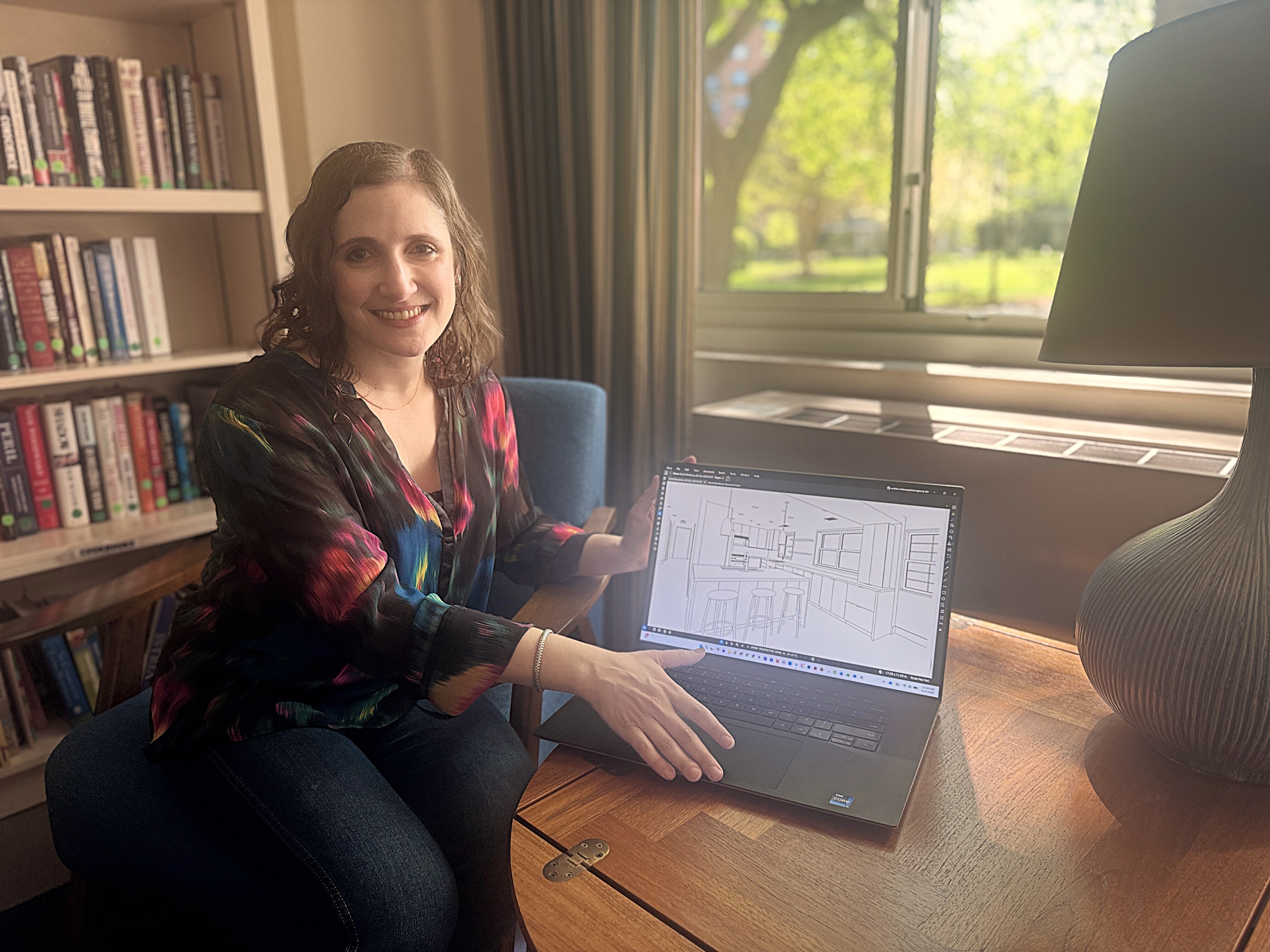
From Early Inspiration to Enduring Philosophy
Emilie Rottman’s path to architecture began well before she ever set foot in a design studio. Growing up in the metro Detroit area, she was instinctively drawn to buildings — not just their form, but the ways they were inhabited, adapted, and brought to life over time. That early curiosity expanded during childhood trips to visit her grandmother in France, where she encountered a rich spectrum of architectural expression and cultural approaches to living.
One place, in particular, left an indelible mark: the Musée d’Orsay in Paris. Once a grand train station, now a museum, the building revealed a compelling duality. “It was just such a cool space,” Rottman recalls. “You could feel and understand what it used to be and what it currently is at the same time.” That sense of layered identity — of honoring history while embracing transformation — continues to shape her design perspective.
Designing With Purpose — and for People
Rottman went on to study architecture at the University of Cincinnati and the University of Maryland, developing a foundation that blends technical rigor with a thoughtful, human-centered approach. Her career has largely focused on multifamily housing and the adaptive reuse of existing structures, where she navigates complexity with both precision and purpose. “I’m very passionate about housing and creating livable spaces for all,” she says.
That ethos often plays out in nuanced, highly specific design challenges. On a recent project, she was tasked with designing a kosher kitchen requiring fully nonporous materials — without relying on stainless steel, the typical solution. “That created a real challenge,” she explains. “But with some research, I was able to find a sink in a white finish that met the criteria and received approval from multiple rabbis.” It’s a telling example of her approach: inquisitive, resourceful, and deeply responsive to client needs.
“Regardless of the project type, I love uncovering the right solution for both the space and the people it serves.”
Beyond individual projects, Rottman views her work through a broader lens — one shaped by both legacy and impact. She is the fourth generation of women in her family to own a business and earn a postgraduate degree, a lineage she carries with intention. “I’m so grateful to be a part of that family history,” she says. “It’s something that motivates me every day.”
Her portfolio spans a wide range of projects across the Washington, D.C., region, each presenting its own set of constraints, opportunities, and moments of discovery. Yet for Rottman, success extends beyond the built work itself. She is equally committed to mentoring the next generation of architects, currently teaching a graduate-level studio online. Through this work, she encourages students to think critically about the built environment and its profound influence on everyday life.
Rooted in Community, Driven by Connection
Her connection to the Del Ray community reflects that same sensitivity to place and experience. During the early days of the pandemic, when daily life felt constrained and uncertain, she found grounding in small, shared rituals — weekly walks along the Mount Vernon Trail, mornings at the Del Ray Farmers Market, and stops at Stomping Ground for biscuits. These moments offered a sense of rhythm, familiarity, and connection.
“That community provided the connectivity I needed during such a challenging time,” she says.
While Stomping Ground has since closed, she still gravitates back to the neighborhood, visiting local staples like St. Elmo’s and Gustav’s whenever she can. The sense of belonging she discovered there continues to resonate — a reminder that architecture extends far beyond the physical, shaping how people gather, connect, and feel at home.
From early inspiration in a reimagined Parisian train station to a career defined by thoughtful interventions and community-minded design, Rottman’s work is anchored by a consistent throughline: a belief in the enduring capacity of spaces to evolve, enrich, and connect.