Walking Together: How Mercer Island Students Are Changing Lives Through PETRI
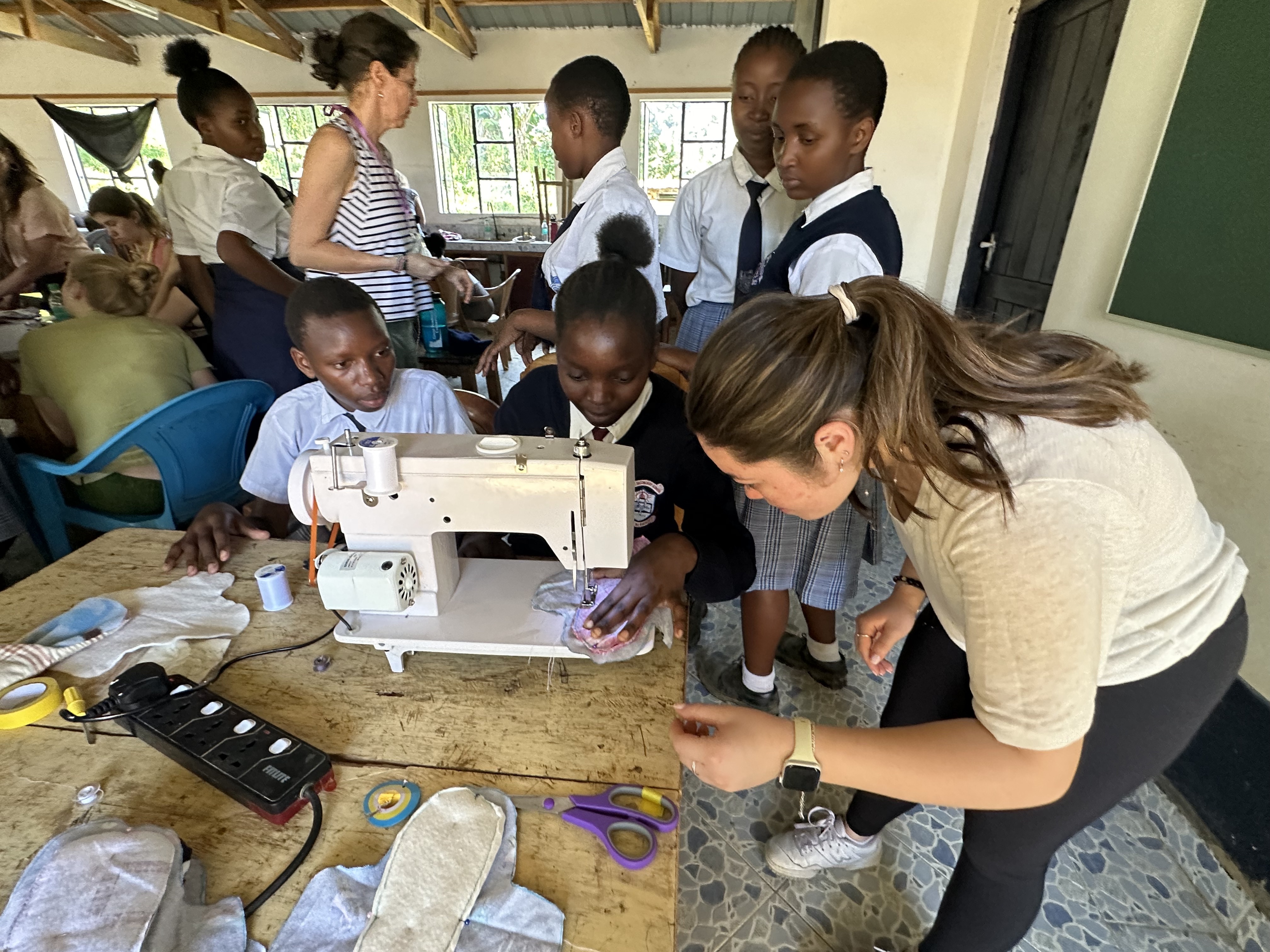
On an ordinary afternoon in 2012, a group of Mercer Island High School biology students gathered to prepare projects for the annual Bio Expo. What happened next would ripple far beyond the walls of their classroom. A casual idea to collaborate with peers in Kenya became a transformative exchange—and eventually, a student-led nonprofit that has supported more than 775 girls in East Africa.
That nonprofit is PETRI (Partnership for Education, Teaching, and Resources International), and today it remains one of Mercer Island High School’s most inspiring stories of student initiative, global friendship, and the power of education.
From Science Fair to Movement
PETRI’s origins read like a serendipitous experiment. Biology teacher Mary Margaret Welch, now the club’s longtime coordinator, remembers reaching out to her colleague Jamie Cook with a proposal: what if their students connected across continents to share research?
The results were profound.
One group studied malaria, pairing Mercer Island students—who were learning about the disease in textbooks—with Kenyan peers who lived with its reality every day. Another group compared water quality challenges, with Seattle-area students working alongside University of Washington researchers while their Kenyan partners documented the daily struggle of collecting clean water.
“The projects themselves were powerful,” Welch recalls. “But what really struck our students were the friendships that developed. They realized that many of their peers in Kenya—especially girls—were being forced to leave school, not because they lacked ability, but because they couldn’t afford fees.”
The sense of injustice was galvanizing. Mercer Island students hosted their first living-room fundraiser in 2013, raising enough to send 14 girls back to school. The commitment grew, and PETRI was born.
Standing Beside Peers
A decade later, PETRI has blossomed into a student-led movement that continues to balance fundraising with friendship. Co-presidents Maya Talby and Anusha Zaveri, both seniors at MIHS, describe the heart of PETRI as “students walking alongside students.”
“The only difference between us and the girls we support is where we were born,” Maya explains. “That realization is so powerful. We’re the same age, with the same hopes for the future, yet our paths have been shaped so differently. PETRI is about making sure those differences don’t decide someone’s future.”
Anusha nods. “We don’t think of it as donor and recipient. Every scholar is paired with a Mercer Island pen pal. We chat, we Zoom, we share stories about our daily lives. When one of us is struggling, the other is there to encourage. It’s solidarity, not charity.”
This peer-to-peer model is what makes PETRI distinct from other education nonprofits. Every scholarship comes with a friendship. Every fundraiser comes with a conversation.
The Impact in Kenya
Since its founding, PETRI has provided scholarships to 775 girls in Taita Taveta, Kenya—including 125 just last year. Each scholarship covers 90% of school fees, while families contribute 10% to remain engaged. But the support doesn’t stop there.
Teacher mentors at each of the ten partner schools receive training and stipends to guide students. Chromebooks—funded by PETRI—connect scholars to Mercer Island pen pals. Wraparound support, from eyeglasses to medical care, ensures that no girl drops out for reasons beyond her control.
The results speak for themselves.
There’s Claudia, once an orphan on the verge of leaving school, who not only graduated but earned a bachelor’s degree in Information Science. Today, she leads her own nonprofit, PAMOJA Girls, empowering others to stay in school.
And Martina, once a shy student, who through mentorship blossomed into a leader—eventually elected her school’s president and now serving on a national advisory board.
“These girls don’t just survive school,” Welch says with pride. “They thrive. And when they thrive, they inspire their communities. Education creates ripple effects.”
The Impact on Mercer Island
For the Mercer Island students running PETRI, the impact is equally transformative.“When I wake up and complain about starting school at 7 a.m., I think of my pen pal who walks over an hour each way to class,” Anusha shares. “It changes your perspective. You stop taking education for granted.”
Maya adds, “It’s made me more grateful, but also more determined. PETRI shows us that we don’t have to wait until we’re adults to make a difference. We can lead, fundraise, and build change now.”
The leadership structure of PETRI reinforces that lesson. With 18 student leaders spread across teams for communications, STEM programming, fundraising, scholarships, and membership, the organization mirrors a professional nonprofit—except it’s run entirely by teenagers.
“Watching them step into leadership is incredible,” Welch reflects. “They learn to present to adults, to ask for donations, to organize events. These are life skills they’ll carry forever.”
A Community Effort
PETRI is also deeply rooted in Mercer Island itself. Students host bake sales, flower sales, and community events outside local businesses. Each summer, PETRI runs a STEM camp for elementary students, raising funds while sparking curiosity in the next generation.
Their biggest fundraiser is the Fall Scholarship Night, where students invite friends and neighbors to hear personal stories in small Zoom breakout rooms. “It’s effective because it’s personal,” Maya explains. “You’re not giving to an abstract cause—you’re supporting a student your neighbor’s kid is passionate about.”
This October, PETRI is hosting its first Strides for Scholars 5K at Luther Burbank Park. Costumes are encouraged, and families across Mercer Island are invited to join.
Challenges and Lessons
Of course, fundraising as high school students comes with hurdles. “Asking for money can feel intimidating,” Anusha admits. “At first, it’s scary to present to adults. But we practice together, we support each other, and it becomes empowering. It’s one of the best things PETRI teaches us.”
They’ve also learned that transparency matters. PETRI operates under SeaVuria, a registered 501(c)(3), ensuring full compliance and reporting. Students go further, sending newsletters and updates to donors so supporters see exactly where their dollars go.
“This builds trust,” Welch says. “But more than that, it builds connection. Our donors aren’t just giving money—they’re part of the story.”
Looking Ahead
As PETRI looks to the future, the goal is not expansion for expansion’s sake but depth of impact.
“In five years, we hope to be providing even more scholarships while strengthening the mentorship and pen pal program,” Maya says. “We want every girl to feel consistently supported.”
The legacy is already visible. PETRI graduates have gone on to launch Women Empowering through Education (WEE) at the college level, carrying the mission forward. And countless Mercer Island alumni leave high school not only with diplomas but with a deeper sense of global responsibility.
“When people ask what PETRI is,” Anusha reflects, “we want them to see two things: girls in Kenya with more opportunities, and Mercer Island students growing into global citizens. That’s the legacy.”
The Ripple Effect of Educating Girls
Mary Margaret offers the final reflection: “When you educate a girl, you change her life. But you also change her family’s life. Her children’s lives. Her community’s life. The ripple effect is extraordinary. And the fact that Mercer Island students are part of that story—it gives me so much hope.”
For readers inspired to get involved, the invitation is clear: follow PETRI’s journey on Instagram (@seavuria.petri), join the upcoming Strides for Scholars 5K, or consider donating a used laptop to connect a Kenyan student with her Mercer Island pen pal.
Because at its heart, PETRI is not just about scholarships. It’s about solidarity. It’s about walking together. And it’s a story that began right here—on Mercer Island.