Where the Buffalo Still Roam
How the Taylor family is proving that locally raised bison can strengthen communities, restore grasslands, and preserve California's ranching heritage.
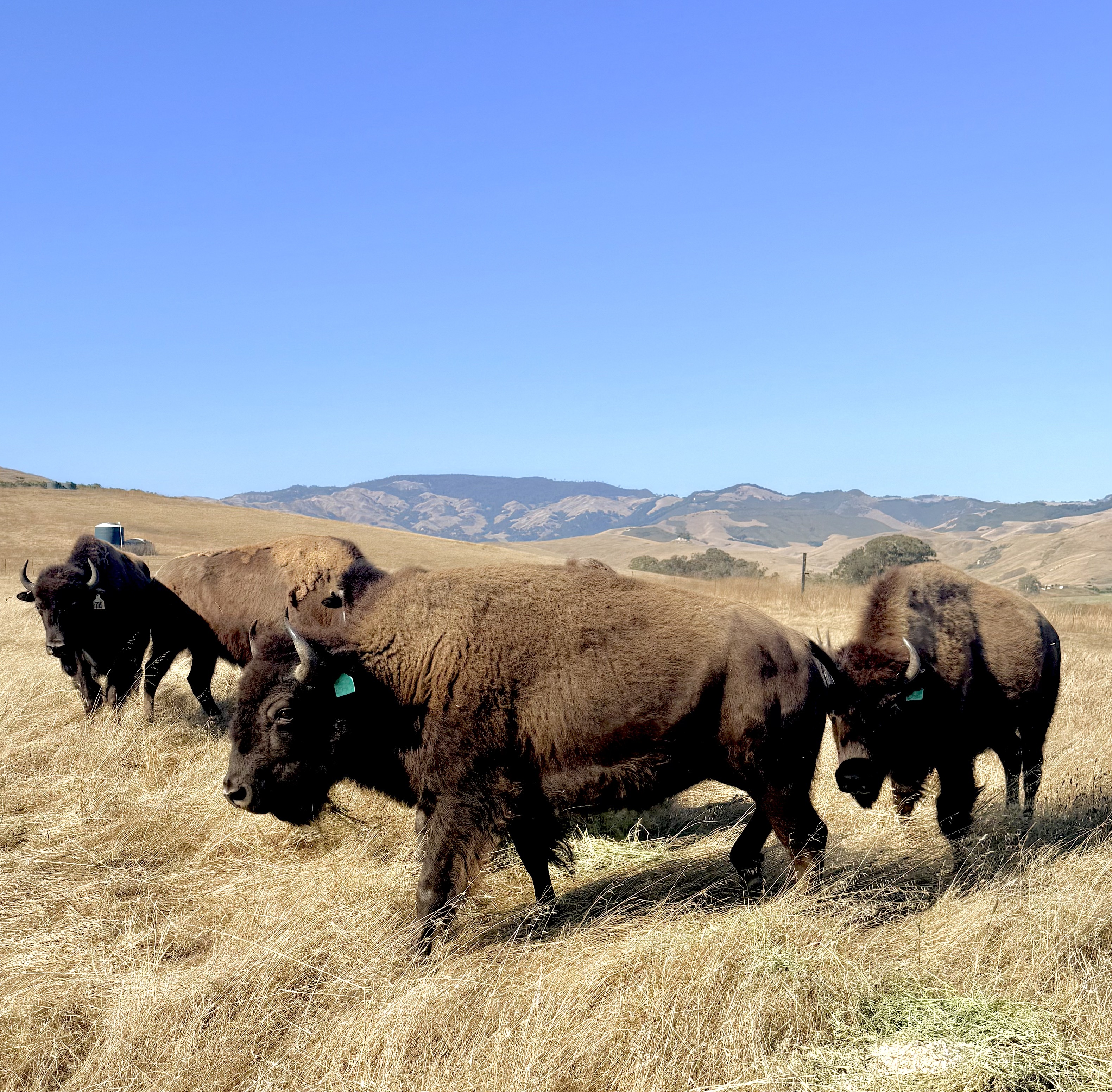
On California’s Central Coast, where ranching traditions stretch back more than 150 years, the Taylor family is betting that the future of sustainable agriculture may look a lot like its past. John and Garrett Taylor, fifth- and sixth-generation Cambria ranchers, still live and work on land their family purchased in 1868 after immigrating from Scotland. Today, Garrett and his wife, Susannah, are raising the seventh generation of Taylors while managing Taylor Ranch’s day-to-day operations across 1,600 acres of coastal rangeland. For a family whose roots run this deep, every decision is made with the next generation in mind. That commitment has led them to embrace an animal that once defined the American landscape, the bison.
Their message is simple: if consumers want healthier food, healthier land, and stronger local agriculture, they need to support locally raised bison. For many consumers, bison is simply viewed as an alternative to beef. But at Taylor Ranch, bison represent something much larger. Every purchase of locally raised bison supports a production system built around natural grazing behavior, pasture health, and responsible stewardship of the land. Unlike industrial food systems that often prioritize efficiency above all else, local bison production keeps both the animals and the economic benefits close to home. The dollars spent on locally raised bison stay in local communities. They support family ranches, local businesses, local jobs, and the preservation of working landscapes that might otherwise disappear. For ranching families like the Taylors, consumer support is not just appreciated, it’s essential.
Bison are remarkably different from cattle. Capable of running up to 40 miles per hour, they possess large lungs and powerful hearts that allow them to move continuously across the landscape. More importantly, they naturally do what regenerative ranchers spend countless hours trying to encourage cattle to do: keep moving. Where cattle often congregate around water sources and repeatedly graze the same areas, bison rarely stay in one place for long. They spread their impact across the landscape, reducing pressure on grasses and allowing pastures more time to recover. “They’re constantly moving,” Garrett explains. “They naturally roam.” That instinctive movement creates healthier grazing patterns, healthier soils, and healthier ecosystems. In many ways, bison are nature’s original regenerative grazers. Regeneration Through Movement Taylor Ranch has invested heavily in rotational grazing practices, dividing pastures and carefully managing animal movement across the property. The goal is simple: mimic natural systems. By rotating animals through multiple pastures, the ranch reduces parasite pressure, protects sensitive areas from overgrazing, improves forage utilization, and allows vegetation time to recover. But while cattle often need to be pushed into these systems, bison seem naturally suited for them. The animals rarely linger in one location. They avoid spending excessive time around their own manure, spread nutrients more evenly across the landscape, and create less concentrated impact on the land. For a ranch focused on regeneration, that’s a powerful advantage. The benefits of supporting local bison extend beyond the ranch gate. Healthy grazing systems improve soil health, increase water infiltration, reduce erosion, and contribute to long-term carbon storage in grassland ecosystems. Predators remain part of the natural balance, helping manage rodents and maintain biodiversity throughout the region. The result is a food production system that works with nature rather than against it. Every pound of locally raised bison helps support those outcomes.
Consumers often ask what they can do to make a positive impact on the environment. One answer may be as simple as choosing food raised by local producers who are actively improving the land they manage. The challenge now is creating enough consumer support to sustain and expand local production. For the Taylor family, raising bison is not just about producing meat. It is about preserving a way of life. For nearly 160 years, their family has cared for the same landscape. Today, that stewardship continues through a commitment to regenerative grazing, responsible land management, and local food production. But the future of ranching cannot rest solely on the shoulders of ranchers. It also depends on consumers.
In a world where consumers increasingly want to know where their food comes from, Taylor Ranch offers a simple answer. It comes from families who have spent generations caring for the land. It comes from animals raised the way nature intended., and it comes from a place where the buffalo still roam. Raised local. Roaming proud.