Gliding Toward the Finish Line
Calvin Forsberg finds his stride on Nordic skis.
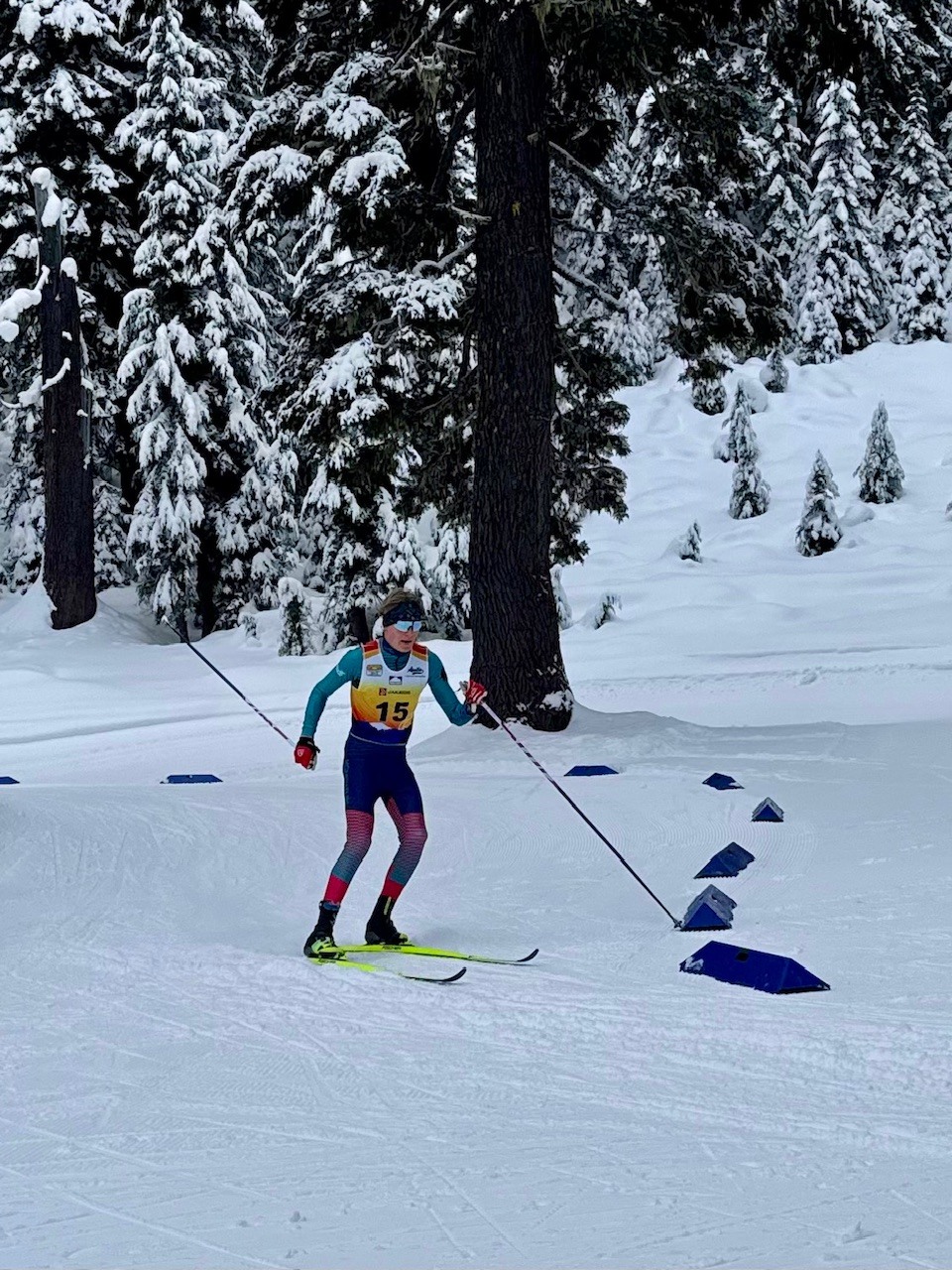
When Calvin Forsberg first stepped into a pair of Nordic skis at age six, he had no idea the sport would become such a big part of his life. Now a junior at Bellevue Christian School, Calvin has spent more than a decade gliding across snowy trails with Momentum Northwest, a competitive youth Nordic ski team serving athletes throughout the greater Seattle area.
For Calvin, Nordic skiing is a sport that blends endurance, technique, and just the right amount of adventure. “Nordic skiing is almost like a combination of cross country running and downhill skiing,” he explains. “The skis are longer, lighter, and thinner than downhill skis, and the courses include rolling hills.” Unlike downhill skiing, where gravity does most of the work, Nordic skiers power themselves across long courses using two techniques: skate skiing, which resembles ice skating, and classic skiing, the traditional style most people picture when they think of cross country skiing.
The equipment is different too. According to Calvin, that is a good thing. “Downhill ski boots are a medieval torture device,” he jokes. “Nordic ski boots are actually comfortable.” Classic skis also have a clever design that allows skiers to climb hills without sliding backward. A flexible section under the ski called a wax pocket presses into the snow when the skier shifts their weight, allowing the wax to grip the snow crystals and propel the skier forward. When everything works perfectly, it feels effortless. When it does not, it can sometimes lead to the occasional faceplant.
Calvin first discovered the sport in 2014 when Momentum Northwest was founded by former World Cup skier Coert Vorhees. The program introduced competitive Nordic skiing to young athletes throughout the Seattle area, and Calvin quickly found himself hooked. “I loved it, and I’ve stuck with it ever since,” he says. During the winter season, Calvin trains with the team four days a week, along with additional workouts on his own. Practices include dryland training in the Seattle area and plenty of time on the snow at Cabin Creek Sno-Park off Interstate 90. Wednesday nights often mean headlamp skiing after school, while weekends bring early morning sessions on the trails.
A typical practice starts with a warm up followed by technique drills. Once the team has focused on improving form, the workout shifts to interval training, often tackling hills while concentrating on the skills they just practiced. Competitions take Calvin and his teammates throughout the Pacific Northwest, including races in Bend, the Methow Valley, Mount Hood, Spokane, White Pass, Plain, and Leavenworth, along with local events at Cabin Creek.
For Calvin, the most challenging part of Nordic skiing is mastering technique. “I run cross country in the fall, so I usually have the endurance base,” he says. “But technique is so important and it’s always something you can improve.” When everything comes together, the payoff is unforgettable. “The most rewarding part is the feeling of flying when your ski is gliding effortlessly along the snow,” he says. “It’s also about pushing yourself and testing your limits.” Calvin has also recently begun exploring biathlon, the Olympic sport that combines skiing with rifle target shooting, although he admits he is still new to that side of the sport. “I can count on one finger the number of times I’ve been to the range,” he says with a laugh. “So I’m not exactly the Sundance Kid.”
Balancing school and athletics has not been too difficult, he says. He simply works to stay ahead on homework earlier in the week so Wednesday evening practices do not leave him scrambling to finish assignments late at night. One of his favorite racing memories came earlier this year in Bend, Oregon.
“The snow was excellent and the course suited me well,” Calvin says. “I ended up doing much better than I usually do, which was really exciting.”
Over the years, Nordic skiing has taught Calvin lessons that extend well beyond the trails. “Success isn’t something that happens overnight,” he says. “Nordic skiing is a development sport. It takes a lot of little things to improve, and sometimes the work you’re doing now might seem small, but later you realize how far you’ve come.” The sport has also introduced him to something many casual skiers never think about: the science of snow and wax. Unlike downhill skiing, where gravity carries athletes downhill, Nordic racers rely heavily on properly waxed skis to reduce friction and maintain speed.
“Wax can make or break your race,” Calvin explains. “Every bit of friction means you have to work harder.”
When Calvin is not training or racing, he enjoys time at home with his family and their 14-and-a-half-year-old Australian Labradoodle, Macaroni. For a skier who first clicked into Nordic skis nearly eleven years ago, the journey is still gaining momentum.