Dahlia Dreaming
From Backyard Experiment to Community Bouquets: A Beginner's Guide to Growing Dahlias in New England.
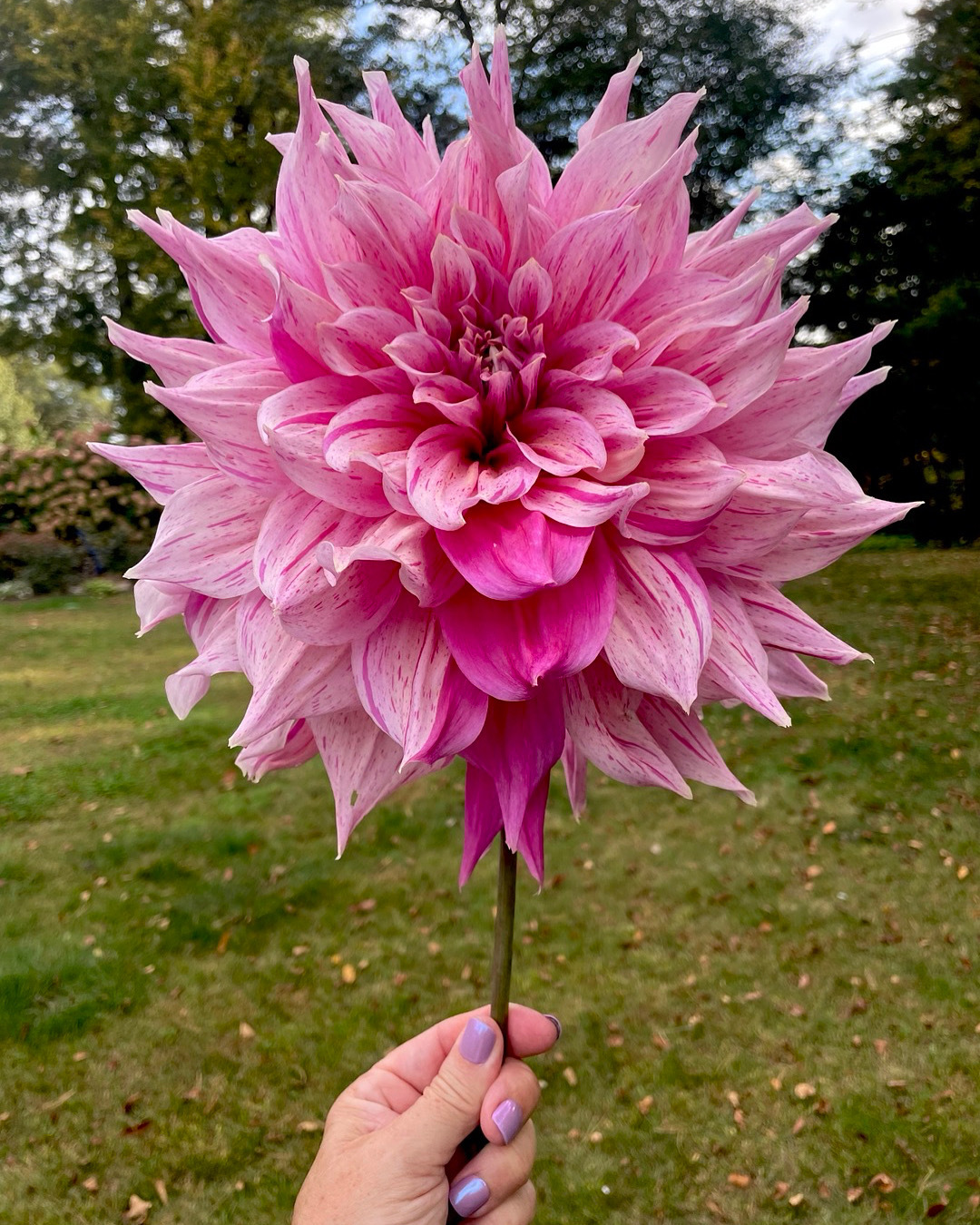
After a long, snowy, cold winter, I think we are all ready to get outside and work in our gardens. I am not a professional gardener, but I grew up in a family of green thumbs. I have fond memories of being outside in the yard when I was young.
My parents, now in their late 70s, still love to garden. They are often found helping me in my yard, and I lovingly refer to them as my “staff.” I hope to pass this passion on to my teenage sons. They might not be there yet, but hopefully they’ll come around someday.
Gardening is truly trial and error. You can’t be afraid to try something new. Often, something that thrives one year is a complete flop the next. I’ve moved plants around my yard more times than I can count in search of the best location. I have numerous perennials, many of which came from divisions from my childhood home. I even have a rhubarb plant that originally grew in my great-grandfather’s garden.
Last summer, I decided to embark on a new adventure: growing dahlias.
I have long admired these beautiful flowers, but they intimidated me because of their reputation as high-maintenance. Dahlias grow from tubers, and in our cold climate, they must be dug up in the fall, divided, stored over the winter, and replanted in the spring.
I did a lot of research before purchasing my tubers from a well-known grower on the West Coast. Since then, I’ve been amazed at how many local growers I’ve discovered and connected with. Gardeners are incredible people—always willing to share advice and tips learned from their own experiences.
I’m pleased to report that I had a very successful rookie season and was able to share several bouquets with friends and family. The plants kept producing, and I decided I wanted to share these beauties with the wider community. I posted on the Windham pages asking for vases—and boy, did you deliver! I also asked for nominations for people who deserved a bouquet. The response was incredible, filled with heart-warming stories.
With the help of the community, I delivered flowers all around town to people nominated by their friends and neighbors. I quickly discovered that giving them away brought me even more joy than growing them.
I can’t wait to have an even bigger garden this year.
Although I’m fairly new to dahlias, I thought I would share my experience and suggestions in hopes of inspiring one of you to try growing them too.
Getting Started
First, you need to purchase tubers. There are numerous online sellers, as well as local growers who hold yearly sales.
Windham is considered USDA Plant Hardiness Zone 6a. This is important because tubers should not go into the ground until after the danger of frost has passed. In Windham, this is typically late April to early May, but it’s probably safest to wait until mid-May. Soil temperature should be around 60 degrees.
I have a small greenhouse, and this year I’m going to experiment with planting a few tubers in pots earlier and transplanting them outside in May, fingers crossed.
Planting & Care
Dahlia tubers come in all shapes and sizes, which doesn’t necessarily indicate how large the plant or blooms will be.
I chose to grow mine in raised beds. Dahlias need a sunny location with 6–8 hours of light per day. The soil should be warm and well-draining to prevent rot.
Plant tubers 12–24 inches apart. Even though they start small, many plants can grow 18 inches or more in diameter. I also highly recommend placing stakes for each plant. They can grow quite tall and will need support to prevent them from toppling over. It’s best to stake early before roots develop—you don’t want to cause damage later.
When you’re ready to plant, dig a hole 4–6 inches deep and lay the tuber horizontally. I add a bit of bone meal in each hole before covering with soil. Be sure to label your stakes so you remember what you planted where (I even drew a backup map!).
One unique thing about dahlias: do not water them in. Watering too early can cause the tubers to rot. Most growers recommend waiting until you see sprouts emerging from the soil.
Now sit back and be patient. It can take 3–5 weeks (or more) for plants to appear. Once they do, the fun begins—morning coffee and a flower stroll to inspect your babies! Dahlias are typically mid- to late-summer bloomers here, but they are absolutely worth the wait. I saw my first sprout the first week of June.
Once plants emerge, they benefit from deep watering 3–4 times per week and a low-nitrogen fertilizer.
Bloom Season
There is such a wide variety of dahlias. Blooms can range from tiny pom-pon flowers just 1–2 inches wide to stunning dinner-plate varieties measuring 12–14 inches across. The choices are endless and the addiction is real.
When your dahlias begin flowering, they will continue to bloom profusely until fall. I was cutting bouquets into October!
End of Season
After the killing frost, wait about two weeks before digging up your tubers (mid-November for me last year). You’ll know it’s time when the leaves die and turn black.
Cut the plants down, leaving about a 6-inch stalk. I use a pitchfork to loosen the soil. Think lifting rather than digging, so you don’t accidentally slice the tubers. You’ll be amazed at how one tuber can turn into 20!
Once they’re out of the ground, hose off the dirt. I used a high-pressure nozzle, which worked great. Let them air dry for a day before dividing. I spread mine out on tarps in the garage.
Dividing can feel intimidating. I watched several YouTube videos beforehand, and once I started, I actually found it fun. It’s amazing how one tuber can create so many potential plants for the next season—talk about a great return on investment.
A viable tuber must have an eye (next year’s sprout), a neck, and a body.
I stored mine in plastic shoe bins filled with vermiculite. They need to overwinter in a cool, dry place, ideally between 40–50 degrees.
As I write this, my tubers are resting in storage. Fingers crossed they wake up happy and ready to grow because I’m planning to expand my garden this spring. I hope this inspires you to try growing something new this year. And if you’re a fellow dahlia grower, I’d love to connect!
Follow me on Instagram @nhplantlady