The Trains and Trolley That Fed a Chocolate Empire
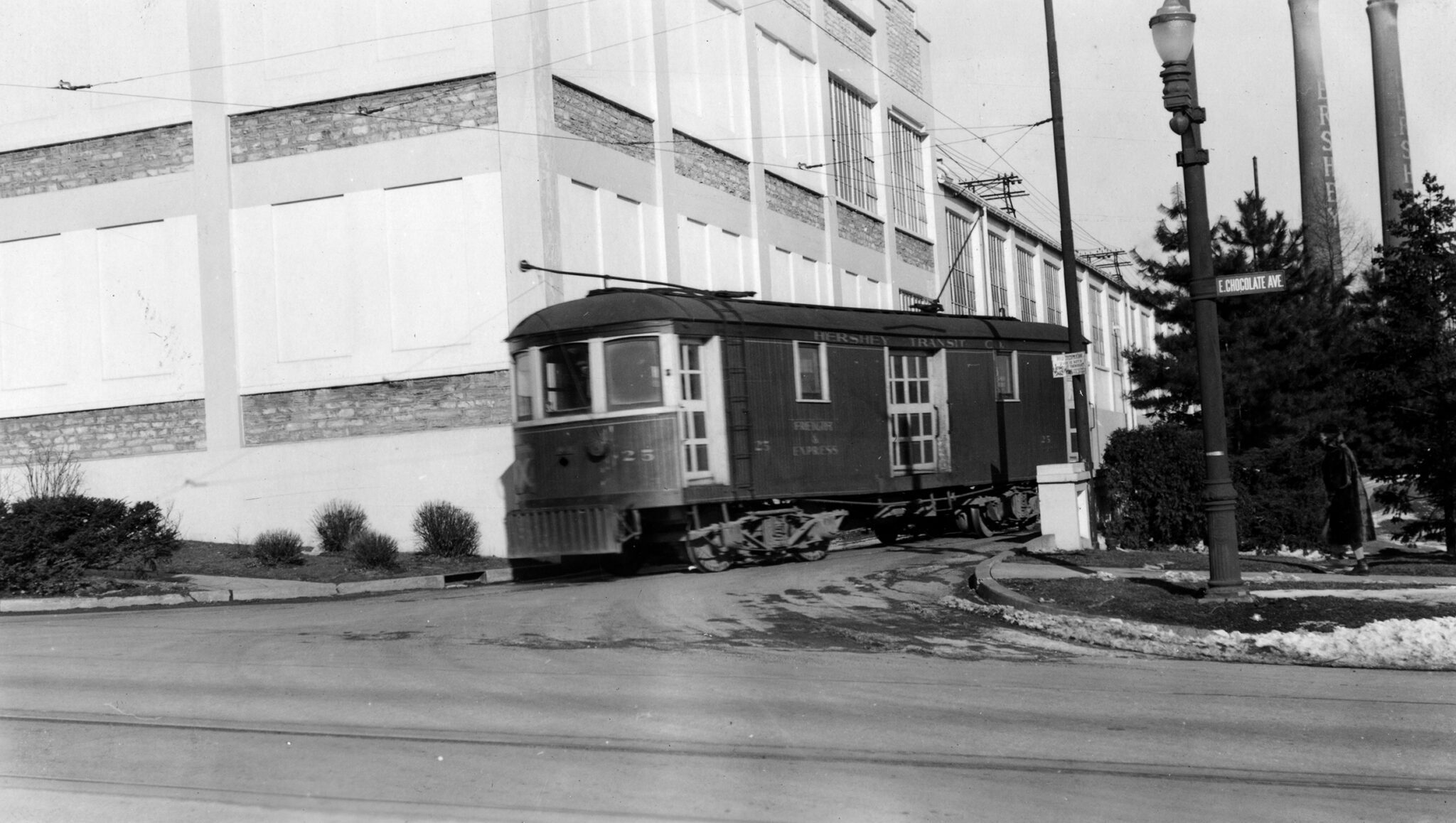
Hershey Transit:Photo courtesy of PA Trolley Museum Photo
For decades, the standard gauge tracks running through the heart of Hershey, Pennsylvania, carried more than just the sweet aroma of roasting cocoa beans. They carried people. While the iconic Hershey Transit station today serves as a reminder of a bygone era, the historical records of the passenger trains that stopped here offer a fascinating window into the daily life, growth, and global connections of Chocolatetown, USA.
Heavy Metal: The Locomotives of Hershey
The physical logs of the Reading Company reveal exactly what kind of mechanical beasts roared into the Hershey Station. Far from standard freight engines, the passenger lines showcased the cutting edge of 20th-century rail innovation:
- Steam Giants: For decades, the backbone of Hershey's tourism consisted of Reading's classic steam locomotives, pulling heavy wooden and steel coaches packed with excited families bound for Hersheypark.
- The Reading Crusader (1937): On November 29, 1937, Hershey hosted the inaugural run of the revolutionary Reading Crusader. Built by the Budd Company, this streamlined, stainless-steel marvel represented the ultimate in luxury travel, complete with insulated, air-conditioned cars and reclining lounge chairs. Thousands of locals gathered at the station just to inspect it.
- Budd Rail Diesel Cars (RDCs): In the twilight era of passenger rail through the 1960s and 1970s, self-propelled Budd RDC cars took over the local lines, providing efficient commuter hops between Harrisburg and Lebanon.
The Lifeline on Wheels: Hershey's Trolley System
You cannot tell the story of Hershey's passenger rail without highlighting the electric streetcars. Founded by Milton S. Hershey in 1904, the Hershey Transit Company operated 36 miles of track at its peak, stretching out to Hummelstown, Palmyra, Lebanon, and Elizabethtown. Unlike systems in major cities that prioritized profit, Mr. Hershey used heavy corporate subsidies to keep the basic fare at exactly five cents. He routinely rode the trolleys himself to check on his workers. The deep-green and yellow-trimmed J.G. Brill trolley cars served a dual, vital purpose: they functioned as a "milk-and-commuter" pipeline. Every single morning, special combination cars transported 50,000 gallons of fresh milk from rural dairy farms straight to the chocolate factory alongside hundreds of inbound workers.
An Historic Train Sighting: Union Pacific Big Boy 4014, July 4, 2026
Swatara Station is a historic, unincorporated working-class enclave located on the western edge of Hershey in Derry Township. Originally established as its own distinct community centered around the Swatara Creek, the village eventually merged into the broader infrastructure of Hershey. The primary landmark of the community is the Swatara Station train depot located at Railroad Street and Hockersville Road.
- The Original Station: The community's first train depot was a wooden structure built along the Philadelphia & Reading Railroad lines. It was completely destroyed by a massive fire believed to have been sparked by a passing train engine. Firefighters from Hershey and Hummelstown struggled to battle the blaze due to a lack of a local water supply, which was only resolved when a railroad engine arrived hauling two massive tanks of water.
- The 1921 Rebuild: To replace the destroyed depot, the Reading Railroad constructed a new, durable masonry structure with a brick and stone exterior. It officially opened in 1921, a date still visible on the building's exterior cornerstone.
- Decline and Restoration: Passenger rail service at the station officially ended in 1963. The station sat abandoned, boarded up, and decaying for decades, briefly operating as a fitness gym called "The Training Station" in 1994. It has since been privately purchased and impeccably restored inside and out by Eric Brandt, David Gamble and the Glass Family, earning a preservation award from the Hershey History Center (See Meet Your Neighbors article).
Swatara Station developed a distinct cultural identity separate from the main corporate layout of Hershey. It served as a vital immigrant pipeline—primarily for Italian, German, and Scots-Irish families. Many newly arrived immigrants got off the train at Swatara Station to build their lives in America. These residents provided the essential "proletariat" labor force that operated the nearby limestone quarries and Milton S. Hershey's expanding chocolate factory.